



At the heart of Oceania, Papua New Guinea (PNG) is home to nearly 10 million people and over 800 spoken languages, making it one of the most linguistically diverse countries in the world. Yet this remarkable cultural richness comes with significant challenges, particularly around digital inclusion: in 2024, only 27% of the population had access to the internet. Priscilla Kevin, a tech entrepreneur and computer scientist from PNG, has dedicated much of her career to bridging this divide and harnessing technology as a tool for economic and civic empowerment. A new portrait of a Missions Publiques fellow..
When she graduated with a degree in computer science in 1997, Priscilla Kevin was among the first generation of IT professionals trained in Papua New Guinea. The country, independent since 1975, was only just beginning to discover digital technologies. Internet access was still new, and the technology sector was in its infancy. “We were mostly users of new technologies and digital tools, not developers,” she recalls today.
At the time, research laboratories were scarce and tech companies to work for were almost nonexistent. Global industry giants such as Google, Apple and Microsoft felt worlds away from the local economic reality. Yet this very situation fuelled her conviction: Papua New Guinea had to develop its own skills and build its own digital ecosystem.
In 2014, she joined forces with Winifred Kula, a fellow computer scientist committed to developing the digital sector in Papua New Guinea. Together, they founded the PNG Digital ICT Cluster, a not-for-profit organisation established through a programme supported by the European Union and led by the National Trade Office of Papua New Guinea. Their ambition was to structure and foster the growth of economic clusters within the information and communications technology (ICT) sector.
The organisation built its work around four core pillars: public policy, entrepreneurship education, innovation incubation and acceleration, and the digitalisation of the economy. More than a decade on, Priscilla Kevin can see how far they have come. Through the Cluster’s awareness-raising and support work, many professionals in the sector have gone on to start their own businesses, develop and commercialise software, or launch consulting firms. “We are no longer just users of technology, we are now active participants in the ecosystem.”
Today, she runs her own consulting firm, which she has led for over thirteen years, and sits on the boards of several technology and ICT organisations, including the Bank of South Pacific. It is this broader engagement that led her to join the Missions Publiques network in 2020 : the conviction that this kind of international network brings, in her own words, “a little more insight and weight to ensure that citizens participate in the digital agenda.”
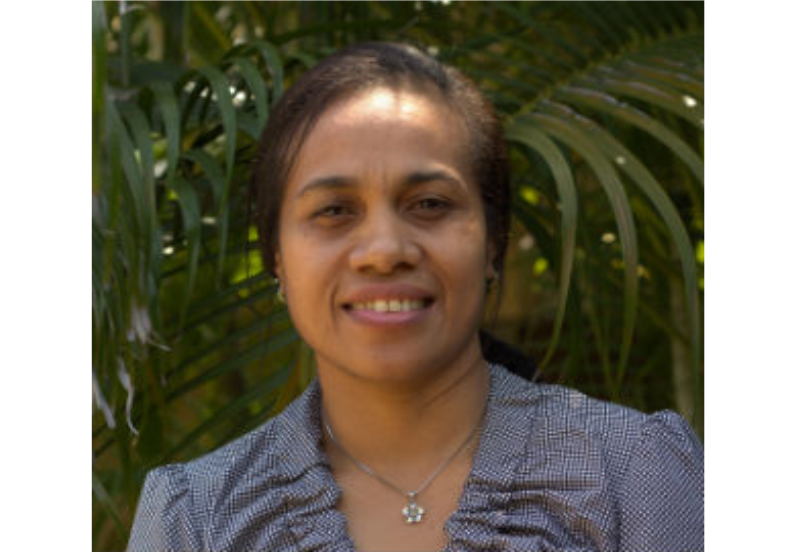
She joined the Missions Publiques Fellows network in 2020, as part of the “We, the Internet” programme, which focuses on digital citizenship and issues surrounding internet access. Papua New Guinea faces this challenge, as a large proportion of its population lacks reliable internet access. At the time, artificial intelligence was not yet at the centre of the debate, but discussions on the subject were beginning to gain momentum, until the Covid crisis brought these initiatives to a halt before they could really take off.
Even today, the digital divide remains one of the country’s biggest challenges. Internet access remains costly, and nearly 80% of the population lives in rural areas, often with limited access to basic services and infrastructure. As an IT specialist, she sees the transformative potential of technology, but also the reality that many citizens are still excluded from it. They often lack the information and tools needed to make informed choices, whether to start a business, access public services, or understand how their personal data is collected and used. “Who collects this data? Where is it stored? What happens when a problem arises?” These questions remain unanswered for many people across the country.
Added to this are practical obstacles. While artificial intelligence is already transforming many sectors around the world, a significant proportion of the population still only has access to 2G networks and does not own a smartphone. “There is still a huge divide. How can we bridge it? How can we create platforms that will enable our citizens to connect and engage more meaningfully, rather than feeling excluded and powerless?”
Over the years, the organisation that Priscilla co-founded has gradually expanded its scope to cover numerous areas. In particular, it has contributed to the drafting of several key pieces of legislation for the country’s digital development, such as the 2021 Electronic Transactions Act, developed with the support of the European Union to promote digital trade. The Cluster also contributed to the Digital Government Act, passed in 2022, which lays the foundations for a public digital infrastructure and paves the way for the modernisation of public services. For Priscilla, these legislative contributions are far from incidental. They are proof that advocating for digital technology can lead to concrete and lasting change.
Access to funding remains a major obstacle for tech entrepreneurs, which is why she and her team have been working to build stronger connections between startups and investors. Traditional financial products, such as bank loans and credit lines, often fail to meet the specific needs of STEM businesses (science, technology, engineering and mathematics). To address this gap, she has initiated discussions with capital market players and the stock exchange to develop financing solutions better suited to these companies.
Among the most impactful initiatives is a training programme launched in 2022 in partnership with the UNDP (United Nations Development Programme), aimed at supporting women entrepreneurs in Papua New Guinea. Over six months, more than 900 participants were trained in digital tools, financial management, social media, website creation and online safety. But the programme went far beyond digital skills: participants were introduced to design thinking, built drones using raw materials, and connected online with women entrepreneurs from around the world. Following the training, many participants launched new businesses or strengthened the management of their existing ones. Although funding ended when the project came to a close, it remains, to this day, the initiative that women remember and talk about most.
Priscilla Kevin also advocates for greater strategic and political recognition of the ICT (information and communication technologies) sector. Ten or twenty years ago, when she started out in the private sector, technology was not regarded as a strategic sector, but rather as a ‘cost centre’, a mere operational matter. Today, however, the entire economy, from commerce to public services, depends on digital infrastructure and everything that stems from it: data management, cybersecurity, digital identity, and so on.
In many countries, cybersecurity is directly linked to the highest levels of government, at the level of the presidency or the prime minister’s office and is considered a matter of national sovereignty. In Papua New Guinea, however, the ICT sector remains largely unrecognised: most public services are not yet sufficiently digitalised to allow citizens to carry out administrative procedures and interact easily with government. This is the gap that Priscilla is working to bridge, convinced that the ICT sector deserves to be recognised as critical, and that digital transformation must benefit all the population.
As new technologies, including AI, continue to advance rapidly, the world is changing fast and the divide between countries is widening. For nations like Papua New Guinea, the question becomes crucial: how to avoid being left behind and ensure that the ICT sector is recognised as a critical industry, even as needs and technologies evolve at an ever-faster pace? This is the challenge Priscilla Kevin takes on every day, advocating for everyone, wherever they are, to have access to the opportunities that new technologies offer. The PNG Digital ICT Cluster itself enjoys recognition beyond the country’s borders: the organisation took part in the Geneva 2020 Dialogue on cybersecurity and has contributed to several international publications, a legitimacy that Priscilla now puts to use in her advocacy work.
Beyond the technological challenges, Priscilla Kevin has to contend with certain prejudices, particularly that of seen through the lens of her gender rather than recognised for her expertise: “When my co-founder and I walk into a room, they don’t see two computer scientists. They see two women,” she explains. A perception that, she believes, sometimes slow down projects or complicate certain discussions. “We are constantly trying to remove the gender label so that our skills and expertise take centre stage.”
As for the development of citizen participation in Papua New Guinea, Priscilla Kevin takes a nuanced view: for those who already have access to digital services, real progress has been made. But for marginalised communities, there is still a long way to go. It is precisely to bridge this gap that the hub project, led by the Cluster, comes into its own. These community spaces enable citizens to access online services, undertake training and learn about new technologies. The Cluster currently has four such hubs, with the aim of bringing technology as close as possible to local communities. Two new hubs are currently being set up in remote rural areas with no road access, but with strong potential for ecotourism and education. By relying on these community networks rather than solely on government bodies, information flows more quickly, enabling residents to make informed decisions, whether political, economic or educational. “Once the hubs are established, we will be able to roll out the same programmes across five hubs,” she explains, convinced that this local network is the key to ensuring that the voices of all citizens are heard, including those who are most isolated.


