


CONTEXT AND OBJECTIVE
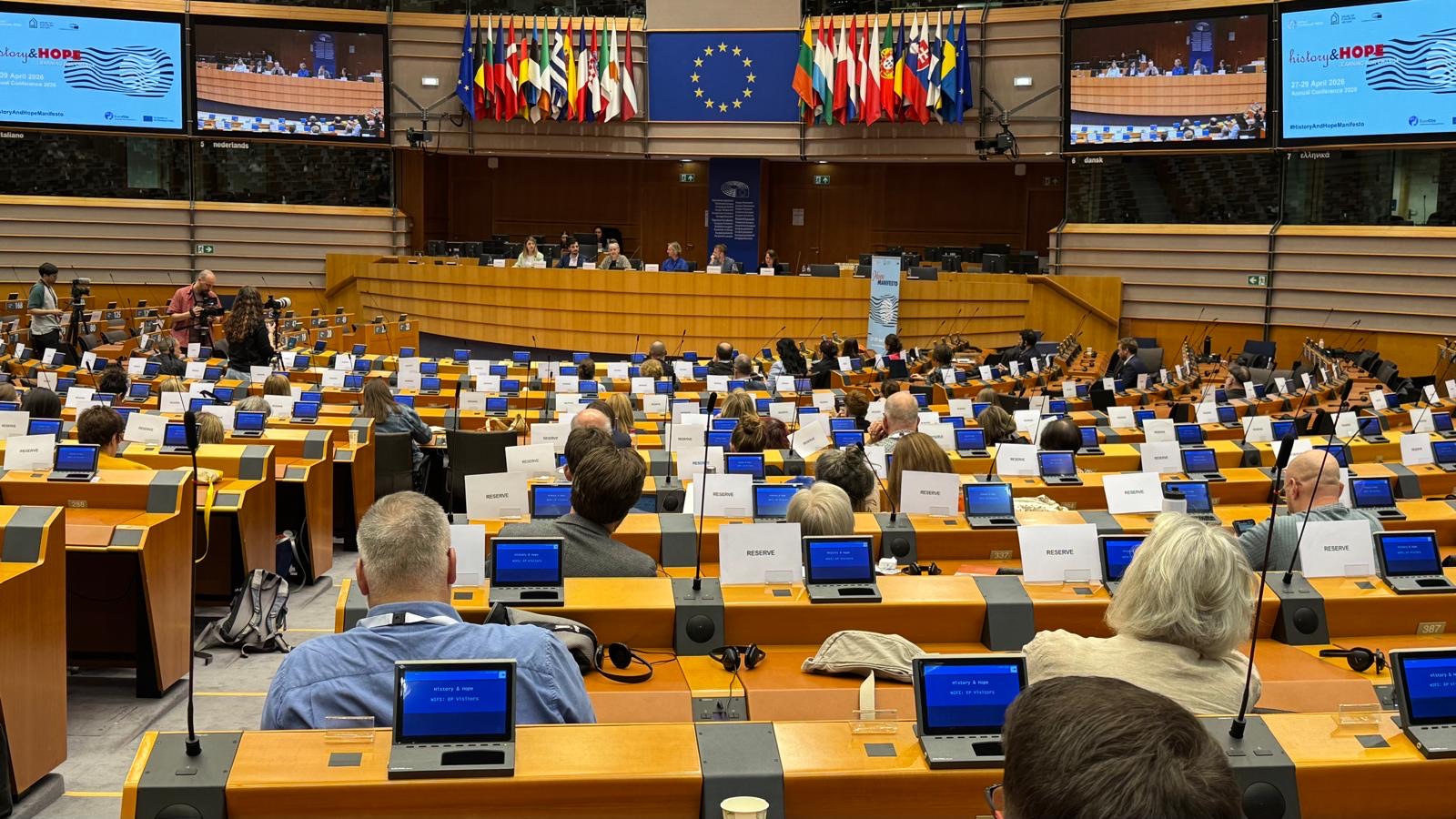
In a context shaped by geopolitical tensions, the polarisation of public debate, and shared educational challenges across Europe, the House of European History chose to make hope a subject of reflection and collective work with the teachers taking part in the 2026 conference, an event it co-organises with EuroClio, the European Association of History Educators.
The Hope Manifesto is part of this ambition: to bring forward, from the lived experiences, practices, and convictions of teachers from different European countries, a common text on how history education can nurture critical thinking and democratic values, but also on how hope in history can itself be understood as a pedagogical practice.
The Manifesto is to be presented during the conference to European decision-makers, and will then circulate beyond the event as a reference resource and a basis for reflection for other actors working in education, memory, and democracy.
MISSION FORMAT
The objective of the mission entrusted to Missions Publiques is to design and facilitate a participatory process enabling teachers to co-write a collective text. The process draws on both individual contributions and dedicated participatory sessions. The challenge is to enable participants to feed into the text throughout the event, while ensuring a gradual progression towards a coherent and consolidated final version.
The mission unfolds in three complementary phases: before, during, and after the conference.
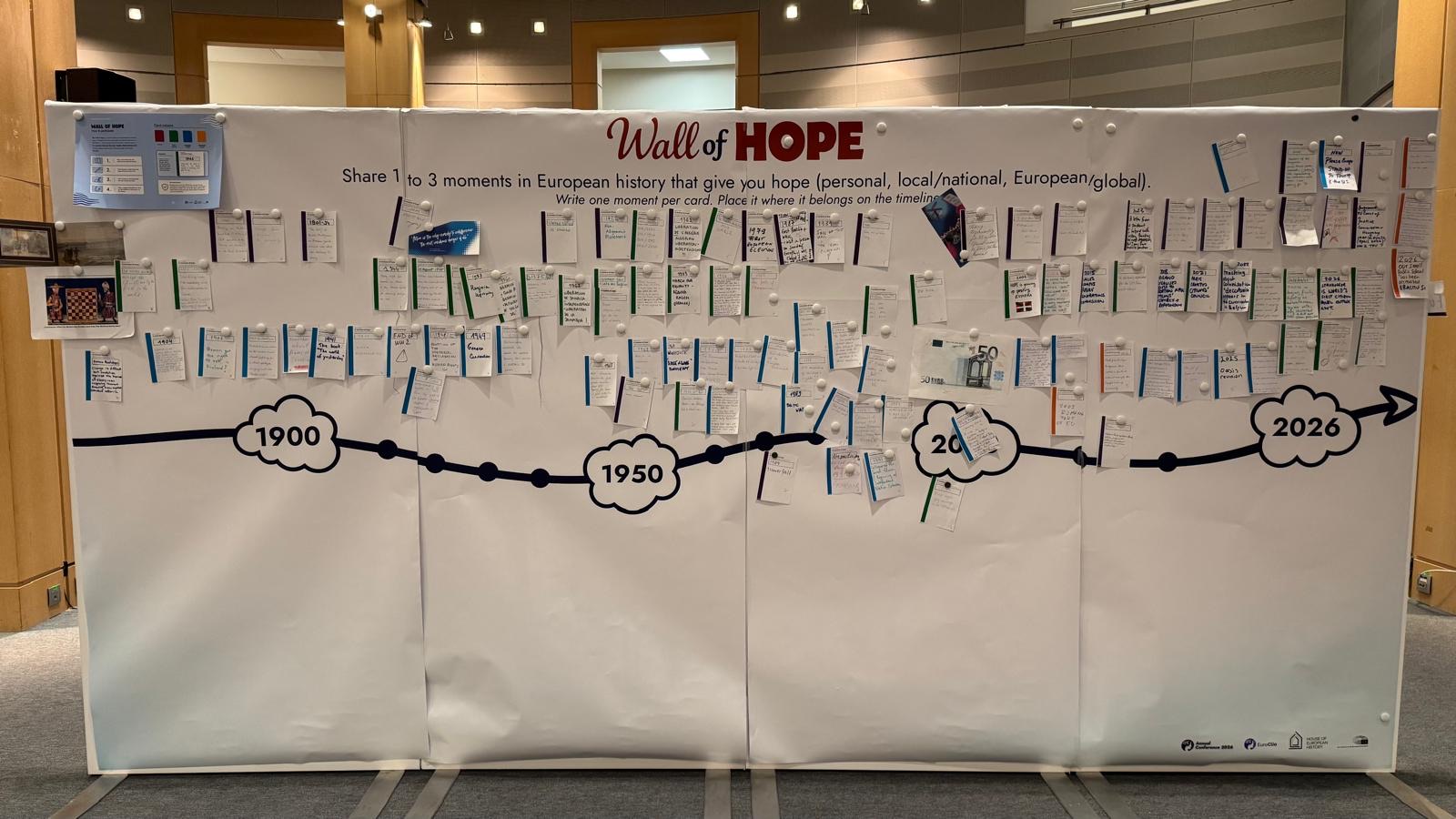
- Before the conference, the Missions Publiques team designs the overall architecture of the participatory process and prepares the conditions for contribution. This includes defining the methodology, proposing an editorial structure for the Manifesto, preparing materials for participants and facilitators, creating a visual installation called the Wall of Hope, which will be fed by participants throughout the conference, and setting up a platform to collect initial written contributions before the opening of the event. Missions Publiques is also involved in designing a dissemination strategy for the Manifesto.
- During the conference, Missions Publiques facilitates the collective working sessions dedicated to the Manifesto, which are structured around three different components:
– collecting and analysing participants’ responses during the conference (through questions asked after each workshop via a QR code);
– facilitating three workshops during the conference specifically dedicated to the Manifesto;
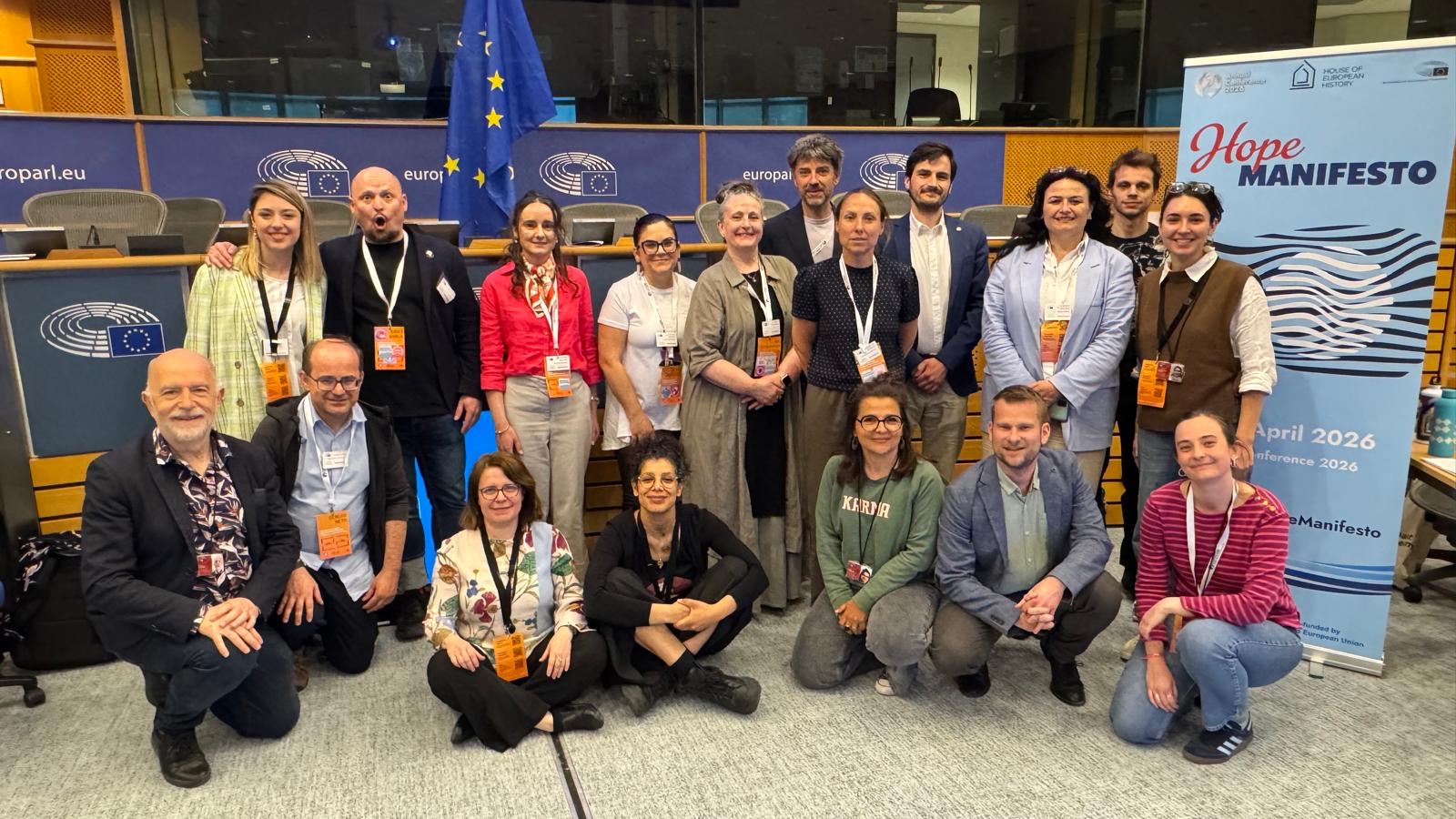
– facilitating the editorial committee, that is, a group of 10 selected volunteers responsible for drafting the Manifesto on the basis of all contributions gathered (questionnaires and workshops).
– A “Wall of Hope” was set up for the entire duration of the conference. It is a visual timeline where participants shared a memory from the past and/or a hopeful vision for the future, ranging from a personal historical perspective to a global scale. Each contribution represents a moment, an event, a reality, or an emotion connected to hope. This creative and interactive installation brought together more than 120 contributions. - After the conference, the mission also includes support for the communication and dissemination of the Manifesto through the preparation of a communication kit and the identification of relay networks, in complementarity with the educational and heritage networks already mobilised by the House of European History and EuroClio. The ambition is to circulate the Hope Manifesto not only within teachers’ networks, but also across broader ecosystems linked to democracy, participation, and civic engagement.