



Who are the people taking part in the Brussels Citizens’ Climate Assembly? How do they view the environmental and social challenges posed by digital technology? Through the stories of Nada, an A&E nurse, and Cesar, a political science student, discover two life stories, two perspectives and two experiences of citizen participation, all centred on the same challenge: envisioning a more responsible digital future.
NADA
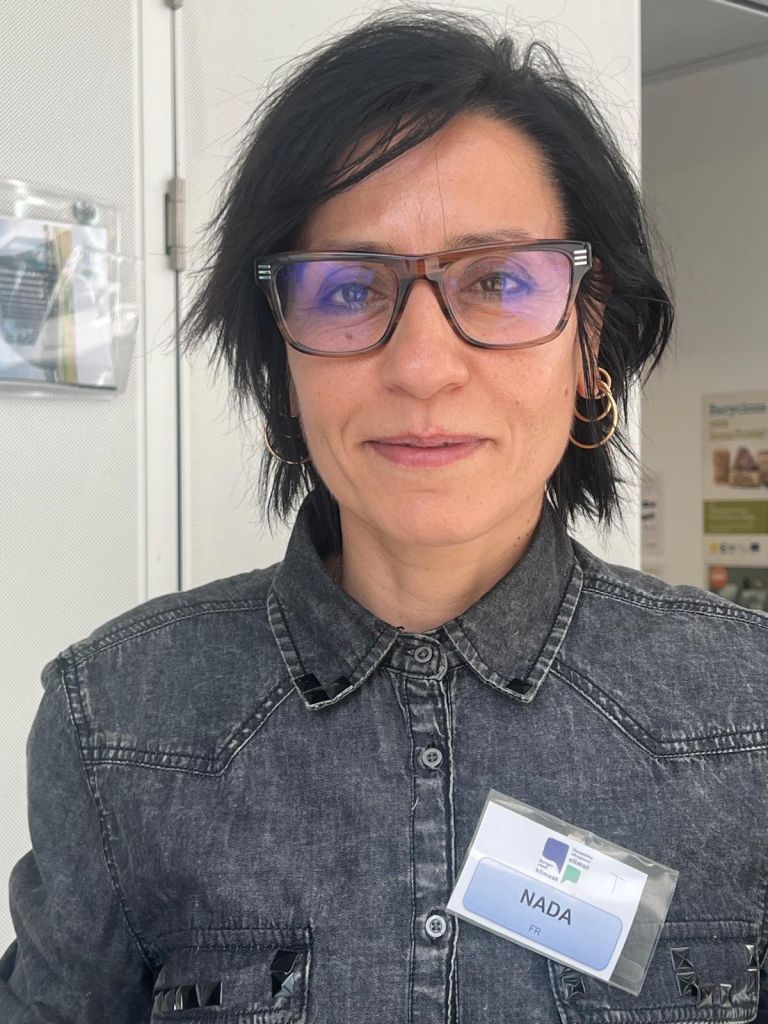
Aged 47, Nada is an emergency nurse and the mother of two boys aged 8 and 11. Originally from Lebanon, she has lived in Belgium for almost 18 years. It was a career opportunity that led her to leave her country: after completing her nursing degree, she answered a recruitment drive from Belgium, which was short of nurses. Once settled, she continued her training with two years of specialisation at Erasme Hospital.
The first year was hard. Nada arrived alone, far from her loved ones. French, the language she had studied in, was familiar to her, but everything else was new. Over time, colleagues became friends and she found her place. It was there, too, that she met her wife. Now settled with her family in the municipality of Uccle, she likes Brussels for its (modest) size, how easy it is to get around and the openness of its people.
When she received the invitation to the Citizens’ Climate Assembly, her first reaction was surprise: she had not known that such a process existed. Then came the desire to take part. Climate change interests her, but its connection with digital technology was new to her. “We’ve been given a lot of information about food and waste, but very little about the impact of digital technology,” she explains. So she wants to learn more. This curiosity ties in with a very practical concern: her children’s future. The rapid development of artificial intelligence worries her; she wants to be able to give her boys the guidance they need to grow up in this world while staying in control of how they use technology.
After the first session, she showed her boys the photos she had taken of the presentations. One example made a particular impression on her: the resources needed to manufacture a computer. For her, it makes a case for keeping devices “for as long as possible”, without giving in to advertising or overconsumption. Her stays in Lebanon, where her mother and siblings live, also give her a different perspective on digital technology. Every time she comes back, she is struck by the contrast with Belgium, which she describes as “a hyper-developed world, overwhelmed by that development”. But she also finds that she can adapt to a less digital everyday life. Making do with less therefore seems possible to her.
Before that first day, Nada was not sure she belonged. “Why am I here? What do I want to say? Does anyone else care what I think?” The discussions reassured her. She recognised experiences similar to her own and discovered that it was possible to reflect together on both the benefits and the drawbacks of digital technology. “I came away convinced that we can do something together.” She now expects what has been said to be taken into account. In particular, she wants investment choices to be open to debate, rather than the unchecked development of AI being taken for granted.
And the adventure may well become a family affair: Nada has promised to bring her boys along on Sunday mornings, “so they can see it for themselves”. It will be a chance to show them what goes on at the Assembly, beyond the stories she brings home.
CESAR
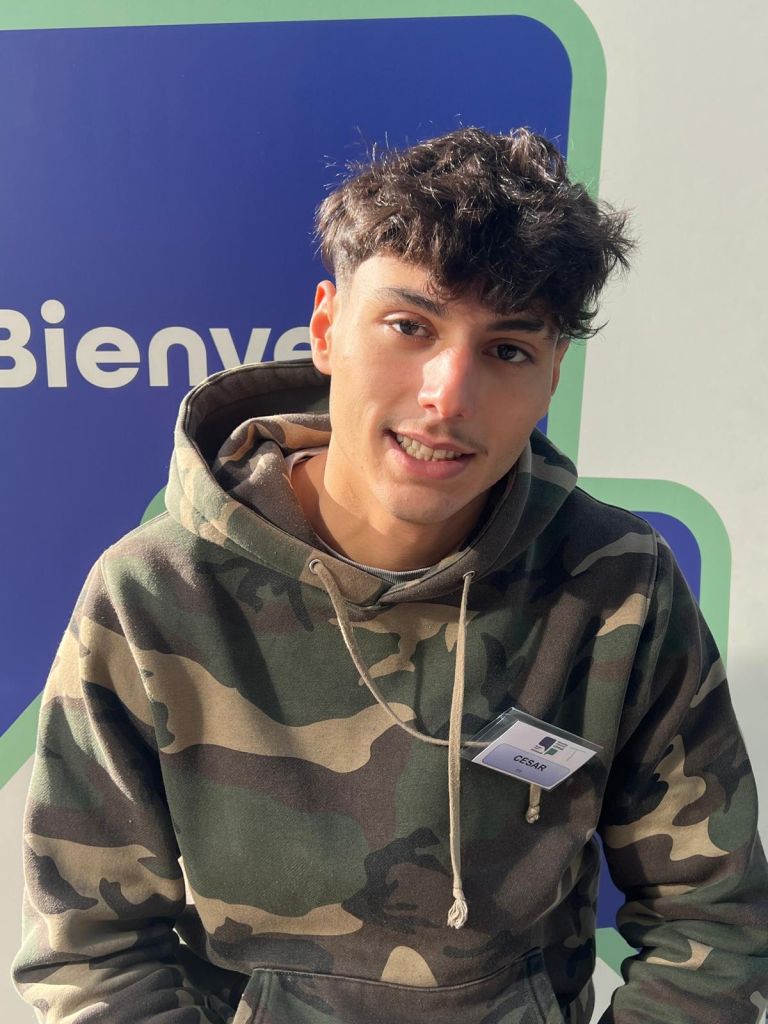
In Saint-Gilles (a municipality of Brussels), where he was born and still lives, Cesar divides his time between political science classes at the ULB (Université libre de Bruxelles) and waiting tables at a restaurant serving sharing plates. It is a job he enjoys and one that, at 19, continues a habit he picked up at 15: working alongside his studies. From dismantling concert set-ups to restaurant work, his part-time jobs cover his university fees and allow him to travel.
His family history spans several borders: his father, born in Casablanca, came to Belgium at the age of 12. His mother was born in Wallonia, into a family of Sicilian origin that had come to work in the sulphur mines.
Cesar has been interested in politics since childhood. As a boy, he used to watch Les Guignols de l’info, the French satirical puppet show that has since gone off the air. He might go into politics one day, but feels he “still has a lot to learn before aspiring to a position of political responsibility”. What he likes about political science is precisely the variety of subjects: it allows him to explore several fields without following a set path.
When he received the invitation to the Citizens’ Climate Assembly, he talked about it with the people around him. A friend who had taken part in a previous cycle strongly encouraged him. Cesar decided to give it a try. He came with convictions as well as questions. For him, pressing social issues must come first. He also doubts whether a region can really tackle a global climate problem. He is particularly concerned about electronic waste being shipped to poorer countries: in his view, reducing pollution here should not mean shifting it elsewhere. That does not stop him from taking part: “I came anyway, and I can’t wait to be proved wrong.”
What stood out for him on the first day was the Secretary of State’s address, though he found the proceedings slow at times, particularly the time spent on the ground rules for discussion. What he likes most is the diversity of the people brought together. “It’s good to have loads of different opinions in the mix, from different social backgrounds, all able to discuss a common subject.”
Comfortable speaking up, Cesar enjoys a good discussion. But he admits that his usual circle tends to be made up of left-leaning people from backgrounds similar to his own. He remembers how surprised he was, as a teenager, to meet someone his age who thought differently. The Assembly gives him the opportunity to keep having such encounters and to test his ideas against those of others.
He also wants to learn more about digital technology. He uses artificial intelligence every day, particularly for his studies, and finds what it can do impressive. But he believes it needs to be regulated. “AI? I use it every day, but I don’t actually know that much about it,” he admits. Looking ahead, Cesar remains curious and has a concrete expectation: the Assembly will be a success “if at least one of our conclusions is taken into account” by the Brussels government.


